

Hybrid and remote work didn’t remove DSE risk, it spread it out.
Instead of one controlled office environment, organisations are now managing:
- home workstations
- hot desks
- shared spaces
- laptops used in less-than-ideal setups
For Health & Safety, HR, and senior decision-makers, this has quietly changed DSE from a contained workplace issue into a systems and governance challenge.
This is where the difference between reactive and proactive DSE management becomes critical.
Reactive DSE Management in Hybrid Workplaces
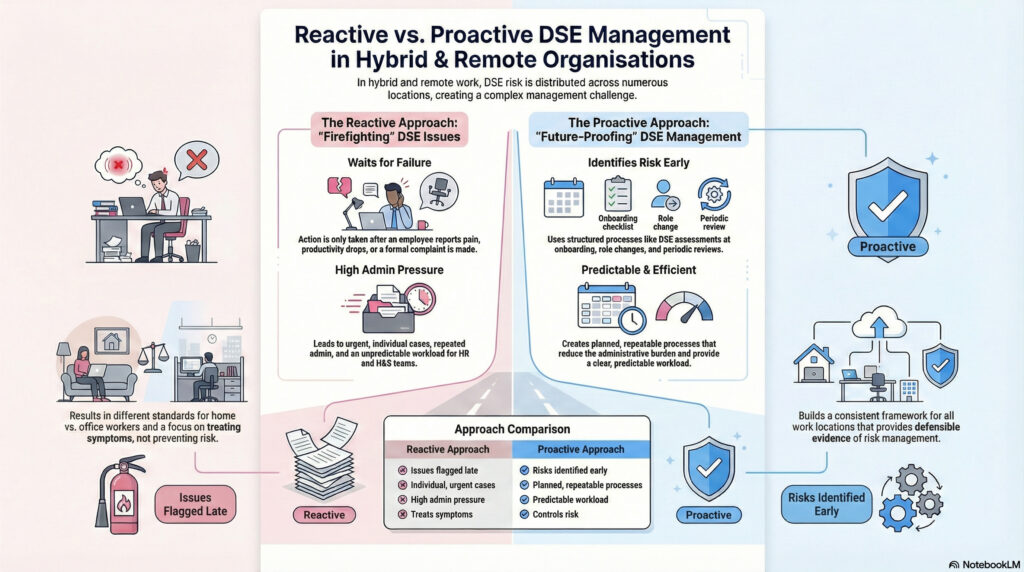
Reactive DSE management is triggered after something goes wrong.
Common triggers include:
- an employee reporting discomfort or pain
- a GP note or occupational health referral
- reduced performance or increased absence
- a complaint or formal concern being raised
Only at this point is a DSE assessment arranged.
In hybrid and remote settings, this approach carries additional risk. Workstation issues develop out of sight, employees often tolerate discomfort for longer, and managers may not see problems emerging day to day.
By the time action is taken, the issue is rarely minor.
In practice, I regularly see DSE assessments requested months after discomfort first appeared — not because the risk wasn’t identifiable earlier, but because there was no clear process for flagging it sooner.
The Impact on HR, Health & Safety and Managers
A reactive approach often results in:
- urgent, individual assessments with limited background information
- repeated administration for similar issues across teams
- unclear responsibility between HR, Health & Safety, IT and Facilities
- inconsistent handling of home versus office workstations
- pressure to “fix” problems that should have been prevented
Rather than managing risk, teams end up responding to symptoms — often under time pressure and with heightened expectations.
Proactive DSE Management: Built for Hybrid Work
Proactive DSE management recognises one key reality of hybrid work:
Variability is normal, it is to be expected — so risk management must be structured.
Instead of waiting for pain or complaints to surface, proactive DSE focuses on early identification, clear processes and proportionate control, regardless of where work is carried out.
What Proactive DSE Looks Like in Practice
In hybrid or remote-heavy organisations, proactive DSE typically includes:
- DSE assessments at onboarding and when roles or work patterns change
- clear guidance for office, home and hot-desking setups
- simple routes for employees to report early discomfort
- defined criteria for when a DSE assessment is required
- clear escalation pathways for higher-risk or complex cases
- periodic review rather than one-off assessments
This approach removes uncertainty for employees and managers and allows risks to be addressed before they escalate.
Why Proactive DSE Matters More in Hybrid Organisations
In hybrid and remote-heavy organisations, proactive DSE management:
- reduces the likelihood of discomfort becoming chronic
- limits repeat referrals for similar roles or tasks
- provides clear, defensible evidence of risk management
- supports managers who are not DSE specialists
- aligns with how work is actually being delivered
It also reduces reliance on informal, undocumented practices that can leave organisations exposed if issues escalate.
A Common Misconception
A proactive approach does not mean:
- creating perfect workstations in every home
- purchasing high-end equipment for all employees
- constant monitoring of how people work
Proactive DSE is about taking reasonable, documented steps to identify and reduce foreseeable risk through guidance, assessment, review and escalation when appropriate.
Perfection is not the goal. Risk control is.
A Simple Sense-Check
Your organisation is likely operating reactively if:
- DSE assessments are mainly triggered by complaints or discomfort
- managers are unsure when to refer employees
- home-working risks are handled inconsistently
- the same issues recur across teams
- DSE feels like an “extra task” rather than part of normal operations
In hybrid organisations, these gaps tend to widen quickly.
The Bottom Line
Reactive DSE management is understandable.
Proactive DSE management is sustainable.
For organisations operating in hybrid or remote-heavy environments, the shift to proactive DSE does not require a complete overhaul. It starts with clearer triggers, better guidance and earlier conversations — particularly where risks are less visible.
When DSE is embedded as a routine part of how work is managed, it becomes quieter, calmer and far more effective.
If you’re reviewing how DSE is managed across hybrid or remote teams and want a practical, proportionate approach, this is exactly the space Boyne Ergonomics supports organisations in.